
Self-order kiosks for food courts and food halls
One kiosk for the whole food court, every kitchen in the hall
In a food hall a group rarely wants to eat from one kitchen. With a shared ordering kiosk, a guest puts sushi, a burger and a dessert in the same basket, pays once, and every kitchen receives its own ticket. Revenue is split per concept, so settling up with your tenants adds up.
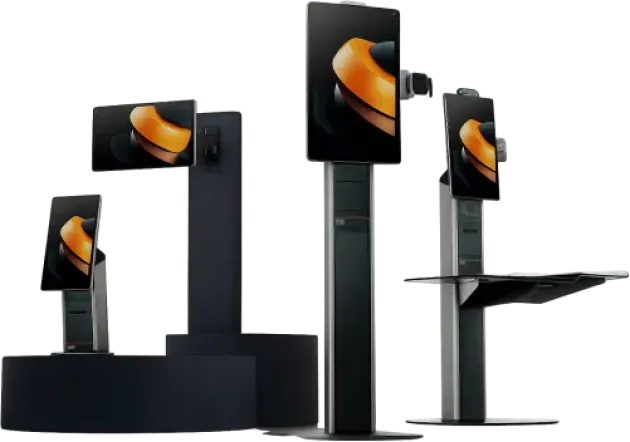
Why a food court needs different software
A food hall is not a restaurant with a long menu, it is ten independent kitchens under one roof. That is exactly what makes ordering awkward: a group of four wants food from three vendors, so they queue three times, with three receipts and three payments. Most guests give up and pick one kitchen, and the rest of the hall loses the sale.
A shared kiosk turns that around. The guest browses the whole hall, pays once, and the system splits the order into separate tickets per kitchen. Each kitchen sees only its own lines, with a shared collection time so the group sits down together.
For the operator the gain is administrative. Revenue is broken down per concept, per kiosk and per part of the day, so the monthly settlement with your tenants comes out of the system instead of a spreadsheet. New tenant in the hall? They are live on every kiosk within a day, through the same CMS you use for everything else.
Where you notice it
-
Several kitchens, one basket
Sushi, a burger and a dessert in the same order and a single payment.
-
A ticket per kitchen
Each kitchen sees only its own lines, against one shared collection time.
-
Revenue per concept
Tenant settlement comes out of the system, not out of a spreadsheet.
-
One buzzer or pickup number
The guest gets a single number for the whole order, even across three kitchens.
-
A new tenant in a day
You add a concept once and it appears on every kiosk in the hall.
-
Multilingual in the hall
Tourist-facing halls run Dutch, English and German on the same screen.
Frequently asked questions
Can kitchens keep their own prices and opening hours?
Yes. Every concept has its own menu, prices and hours in the CMS. A kitchen that opens at five only appears on the kiosk at five.
How is revenue divided?
The order is split per concept at the moment of payment, so reporting shows revenue, VAT and order counts per tenant. What you agree in the lease on top of that stays up to you.
Do you work with the tenants' own tills?
It can go either way: the kitchen works on our kitchen display, or tickets pass through <a href="/en/integrations/api-access">our API</a> into the tenant's existing till system.
How many kiosks does a food hall need?
As a rule of thumb, one kiosk per 60 to 80 seats, plus one at the entrance. In a hall with an evening peak we prefer a cluster over spreading them out, so the queue orders itself in one place.
Our kiosks work anywhere visitors arrive
All industriesHow others put the kiosk to work
- Self-order & hospitality Guests order and pay themselves, the kitchen gets one ticket stream.
- Retail & webshop Your full webshop stock in-store, linked to Shopify or WooCommerce.
- Check-in kiosks Visitors check themselves in, with a ticket, pass or licence plate.
- Custom & automation Your own screens, your own flow, wired into your own systems.
Come and see one, or let a kiosk stand at your place
Tell us what you want to solve. We think along about the setup that fits your location, and you get an answer within one working day.
- Software built in the Netherlands
- One CMS for kiosk, POS and webshop
- Fully in your own brand style
- Hardware to buy or lease, from a small monthly amount